How to Lose Belly Fat Without Spot-Reduction Myths
Learn what ab exercises can change, why targeted belly-fat loss is unreliable, and how to build a sustainable training and nutrition plan.
- belly fat
- fat loss
- core training
- ab exercises
- weight management

 Bodybuilding Advice
 You cannot reliably choose to lose fat only from your belly by training your abs. Abdominal exercises can strengthen the muscles and improve trunk endurance, but visible belly-fat loss mainly follows broader changes in total and regional body fat. One small study found a regional effect from a very specific protocol, so the honest answer is nuanced: local effects may occur in some conditions, but ordinary ab work is not a dependable targeting tool.
What Ab Exercises Actually Do
Your abdominal muscles respond to training like other muscles. Crunches, carries, cable presses and controlled trunk movements can improve strength, endurance and movement control. That is a useful reason to train them even when the mirror does not change quickly.
In a 2011 controlled trial of abdominal exercise, twenty-four sedentary adults were assigned to a control group or six weeks of abdominal work. The exercise group improved abdominal endurance, but the researchers found no significant reduction in abdominal fat or waist-related measures. The result does not say that core training is useless. It shows that stronger abs and less fat are different outcomes.
A 2007 clinical trial of contractions and adjacent fat tissue found greater blood flow and lipolysis beside contracting muscle in ten fasting men. That acute local process is real, but it is not the same outcome as a lasting reduction in local fat mass. Feeling a muscle work therefore does not prove that the fat above it will disappear.
Why the Spot-Reduction Evidence Is Mixed
A 2023 randomized trial of abdominal aerobic endurance exercise deserves attention because it challenges an absolute claim that local effects never happen. Sixteen overweight adult men completed ten weeks of training. One group combined treadmill running with fifty-seven minutes of torso rotation and abdominal crunch work, while the comparison group performed energy-matched treadmill running. The combined group lost more trunk fat, even though both groups lost similar total fat.
That result is interesting, but it is not a promise that a few daily crunches will flatten one person's stomach. The sample was small, included only men, and tested a long, specialized endurance protocol four days per week. It also measured trunk fat rather than proving that every participant could choose an exact abdominal area. The earlier 2011 trial found no local fat change from a different routine. Together, the studies support uncertainty, not a guaranteed shortcut.
The wider evidence points back to overall change. A systematic review of sixty-five studies found that reductions in total body fat were associated with reductions in both visceral and abdominal subcutaneous fat. The relationship varied by tissue and intervention, but the practical message was consistent: abdominal fat usually changes as part of a broader response to sustained energy balance and activity.
What Reliably Changes Abdominal Fat
Build the plan around actions that affect the whole system. The NIDDK weight-management guidance combines a healthy reduced-calorie eating pattern that can be maintained with regular physical activity. It also recommends aerobic activity and muscle-strengthening work rather than one body-part routine.
Exercise type can vary. A 2024 network meta-analysis of eighty-four randomized trials found that aerobic exercise, resistance training, combined training and high-intensity interval training can reduce visceral fat in people with overweight or obesity. The average effects differed, and the participants were not all alike. The useful conclusion is not that everyone needs the hardest option. It is that several repeatable forms of exercise can contribute when the weekly plan is large enough to matter.
Nutrition does not need to become extreme. Start by identifying repeatable meals, drinks and snacks that make an appropriate calorie reduction possible without turning every day into a test of willpower. Training supports health, fitness and energy expenditure, but it does not erase an eating pattern that consistently exceeds your needs.
Use This Four-Part Weekly Plan
Use the following checklist as general fitness education, then scale it to your experience, recovery and schedule.
- Keep two or more whole-body strength sessions. Train the major movement patterns instead of replacing them with an ab-only circuit. A structured beginner can start with the three-day weight-loss gym program when that frequency fits.
- Accumulate aerobic activity you can repeat. Walking, cycling, jogging, rowing or another familiar option can contribute. The public-health reference point is at least 150 minutes of moderate activity per week for healthy adults, but gradual progress is more useful than an unsustainable first week.
- Train the core for function. Add two or three short blocks after normal sessions. Choose a flexion movement, an anti-extension or anti-rotation movement, or a loaded carry. Stop adding volume when technique degrades or the work interferes with your main training.
- Make one maintainable food change at a time. Replace a high-calorie drink, reduce an automatic snack, adjust a repeated portion, or build a meal around filling minimally processed foods. Use the practical muscle-building grocery system for meal-building ideas, then adjust portions to the fat-loss goal.
This is also why the choice between cardio and lifting is usually false. The cardio versus weights guide shows how to combine both around time, recovery and preference. The best mix is one you can perform for long enough to evaluate.
Measure a Trend and Adjust the Plan
Do not judge the plan from one workout, one meal or one morning in the mirror. Use the same waist-measurement conditions once per week if that metric is useful to you, and look at body-weight or clothing-fit trends across several weeks. Training performance, energy and adherence add context. A flat seven-day result is noise, not proof that you need hundreds more crunches.
If the broader trend does not move, check the boring variables first: how many planned sessions were completed, how much daily movement actually happened, and whether the food change was consistent. Adjust one lever, keep it for a reasonable observation period, and avoid rewriting the entire program from a single measurement. The realistic workout-results timeline gives a broader framework for judging progress without chasing daily changes.
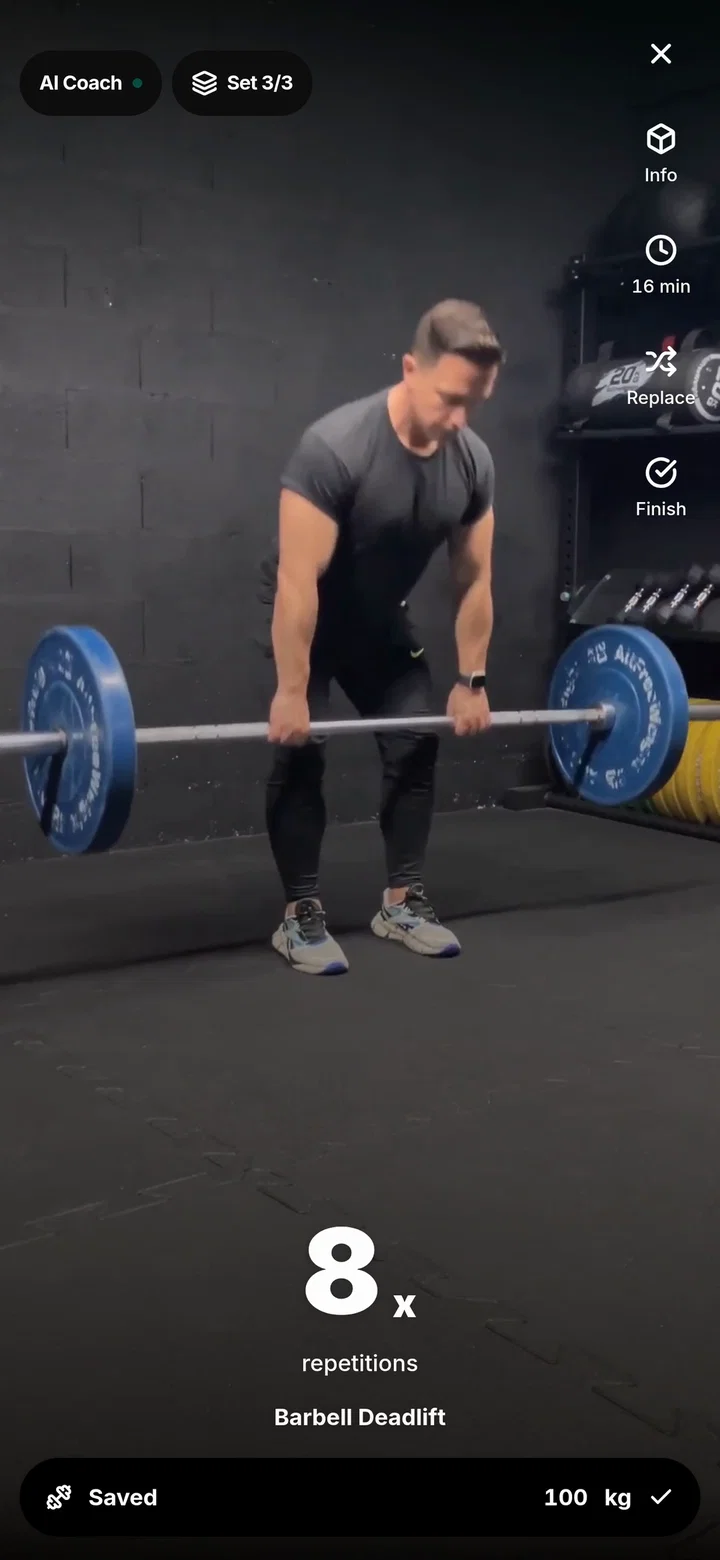
WorkoutGen can organize the training side after the standalone fat-loss decision is clear. WorkoutGen creates personalized, periodized workout programs from a 60-second questionnaire and a coach-built decision tree; the program is not generated by an LLM. A free account includes a personalized program, 350+ HD videos, the workout player, rest timer and session completion. It is available as a native iPhone app on the App Store and through the web, including an installable PWA on Android, tablet and desktop; the native Android app is coming to Google Play. Follow the generated structure rather than adding arbitrary ab volume in the hope of forcing local fat loss.
The practical takeaway is simple: train your abs because the muscles matter, not because they can guarantee where fat disappears. Use whole-body strength work, repeatable aerobic activity and a maintainable energy deficit for fat loss. Treat claims of guaranteed local reduction as stronger than the evidence allows.
References
- The effect of abdominal exercise on abdominal fat
- Abdominal aerobic endurance exercise reveals spot reduction exists: randomized controlled trial
- Contractions and lipolysis in adjacent subcutaneous fat tissue
- Calorie restriction, structured exercise and abdominal fat: systematic review
- Exercise types and visceral adipose tissue: network meta-analysis
- NIDDK eating and physical activity guidance
Build a Complete Fat-Loss Training Plan With WorkoutGen
Choose your goal, level, schedule and available equipment to create a structured program instead of relying on an ab-only shortcut.
- Personalized, periodized program from your profile
- 350+ HD exercise videos with a free account
- Workout player, rest timer and session completion