How Long Does It Take to See Workout Results: Science-Based Timeline
You will feel stronger in 1 to 2 weeks, see early muscle changes in 4 to 6 weeks, and get noticeable results in 8 to 12 weeks. Here is the science of how fast your body transforms with training.
- workout results
- muscle growth timeline
- how long to see results
- beginner fitness
- progress tracking
- consistency
- motivation
The Short Answer
You will feel stronger in 1 to 2 weeks, notice early changes in muscle tone in 4 to 6 weeks, and see clearly visible results in 8 to 12 weeks of consistent training. That is the honest timeline, backed by exercise science.
Here is the catch: most people quit between week 3 and week 6, right before results start showing. They train hard, feel sore, look in the mirror, see nothing different, and conclude it is not working. It is working. They just stopped before the payoff.
This article breaks down exactly what happens in your body week by week, why results vary so much between people, and how to know your training is working even when the mirror has not caught up yet.
Week 1 to 2: You Get Stronger (But Not Bigger Yet)
The first thing you notice when you start lifting weights is that the weights feel lighter. You can lift more, do more reps, and recover faster between sets. This is real progress, but it is not muscle growth.
It is neural adaptation. Your brain is learning to recruit muscle fibers more efficiently. Before training, your nervous system activates only a fraction of the fibers in each muscle. In the first 1 to 2 weeks, it learns to fire more of them simultaneously, which translates to immediate strength gains without any change in muscle size.
This was demonstrated by Staron and colleagues (1994), who found significant strength improvements in the first 2 to 4 weeks of resistance training with minimal changes in muscle fiber size [1].
What you will feel
- Weights that felt heavy last week feel manageable
- You recover faster between sets
- Your coordination improves (movements feel smoother)
- You might gain 1 to 2 kg on the scale (water retention from muscle inflammation, not fat or muscle)
What you will NOT see yet
- No visible muscle growth (it is too early)
- No dramatic body composition change
- Possibly more soreness than you expected (DOMS peaks at 24 to 48 hours post-workout)
The takeaway: the strength gains in week 1 to 2 are real and important. They are the foundation for everything that follows. But they are invisible in the mirror, and that is normal.
Weeks 2 to 6: The Foundation Phase
This is the hardest phase psychologically. Your body is adapting at a cellular level, but the changes are not yet visible when you look in the mirror.
Research by Damas and colleagues (2018) showed that during the early phase of resistance training (first 3 to 8 weeks), your body goes through significant internal remodeling: satellite cells activate around your muscle fibers, your muscles become more damage-resistant (the repeated bout effect), and muscle protein synthesis rates increase [2].
What is happening inside
- Satellite cell activation: these are muscle stem cells that donate their nuclei to muscle fibers, enabling them to grow larger. This process ramps up in weeks 2 to 4.
- Reduced muscle damage: the same workout that left you sore for 3 days in week 1 now produces minimal soreness. Your muscles have adapted to protect themselves.
- Increased protein synthesis: your body becomes more efficient at using dietary protein to build muscle tissue, but this does not translate to visible size yet.
What you might notice
- Your muscles feel "harder" or "denser" even if they are not visibly bigger
- Improved posture (stronger back and core muscles pull you upright)
- Your clothes might fit slightly differently, especially around the chest, shoulders, and waist
- You can push harder in workouts without feeling destroyed the next day
The danger zone
Weeks 3 to 6 are where most people quit. The initial excitement has worn off, the scale has not moved much, and the mirror has not changed. But underneath, the groundwork for muscle growth is being laid. Quitting here is like planting a seed, digging it up after 3 weeks, and concluding gardening does not work.
If you make it through this phase, weeks 6 to 12 will reward you.
Weeks 6 to 12: Visible Results Begin
This is where the magic happens. Around week 6, muscle hypertrophy (growth in muscle fiber cross-sectional area) starts to become measurable and, for many people, visible.
The research is consistent: significant increases in muscle fiber size typically require 6 to 8 weeks of consistent training. The Schoenfeld dose-response analysis (2017) showed that with adequate training volume (10 to 20 sets per muscle group per week), hypertrophy accelerates meaningfully after the initial neural adaptation phase [3].
What you will see
- Friends or family start commenting on your physique ("Have you been working out?")
- Muscle definition increases, especially in the arms, shoulders, and chest (for men) or legs, glutes, and arms (for women)
- Your posture is noticeably better
- The "pump" after a workout looks more pronounced because your muscles are larger
- Progress photos (taken under the same lighting) show a clear difference
What you will feel
- Significantly stronger than when you started
- Workouts feel like a habit, not a chore
- Recovery is faster: you bounce back from sessions within 24 hours
- Your body craves training (the neurological reward system has adapted)
The key metric: progress photos
The mirror lies from day to day because changes are gradual. Lighting, water retention, and time of day all distort perception. Take a progress photo every 2 weeks under the same conditions (same lighting, same time of day, same pose). Comparing week 2 to week 8 side by side will shock you. Comparing day to day will not.
Months 3 to 6: The Transformation Phase
By month 3, if you have been training consistently (3 to 4 sessions per week, eating enough protein, and sleeping adequately), you are in the middle of a genuine transformation.
Your body composition has shifted: more muscle, less fat (if you are in a slight caloric deficit or at maintenance), and the shape of your muscles has changed. This is the phase where people who have not seen you in a while do a double take.
What to expect
- Muscle growth is now visible even in relaxed poses, not just flexed
- Strength gains are substantial (many people have doubled their starting weights on major lifts)
- Your body has settled into a rhythm: you recover well, train hard, and feel energized
- Small muscles (forearms, calves, neck) start catching up to the large muscles
The plateau risk
Around month 4 to 5, your rate of visible progress may slow down. This is not because training stopped working. It is because the initial "newbie gains" (rapid adaptation in untrained individuals) are tapering off, and progress becomes more incremental.
This is where progressive overload becomes critical. If you are doing the same weights, same reps, same exercises as month 2, your body has no reason to keep adapting. You need to increase the stimulus: more weight, more reps, more sets, or new exercises.
This is also where a structured, adaptive program outperforms a generic routine. Your body adapts to repetition. To keep growing, the stimulus must change in a planned, intelligent way.
Months 6 to 12: Peak Visible Results
By 6 months of consistent training, you have built a physique that looks trained. Not competitive bodybuilder level, but unmistakably athletic. People who meet you for the first time assume you have always been in shape.
By 12 months, you are approaching your genetic potential for "newbie gains" and entering intermediate territory. Progress from here is slower but still real. The key shifts from "building a base" to "refining and optimizing."
What 12 months looks like
- Muscle mass: you have gained 4 to 8 kg (9 to 18 lbs) of lean mass (assuming adequate nutrition), depending on genetics, starting point, and consistency
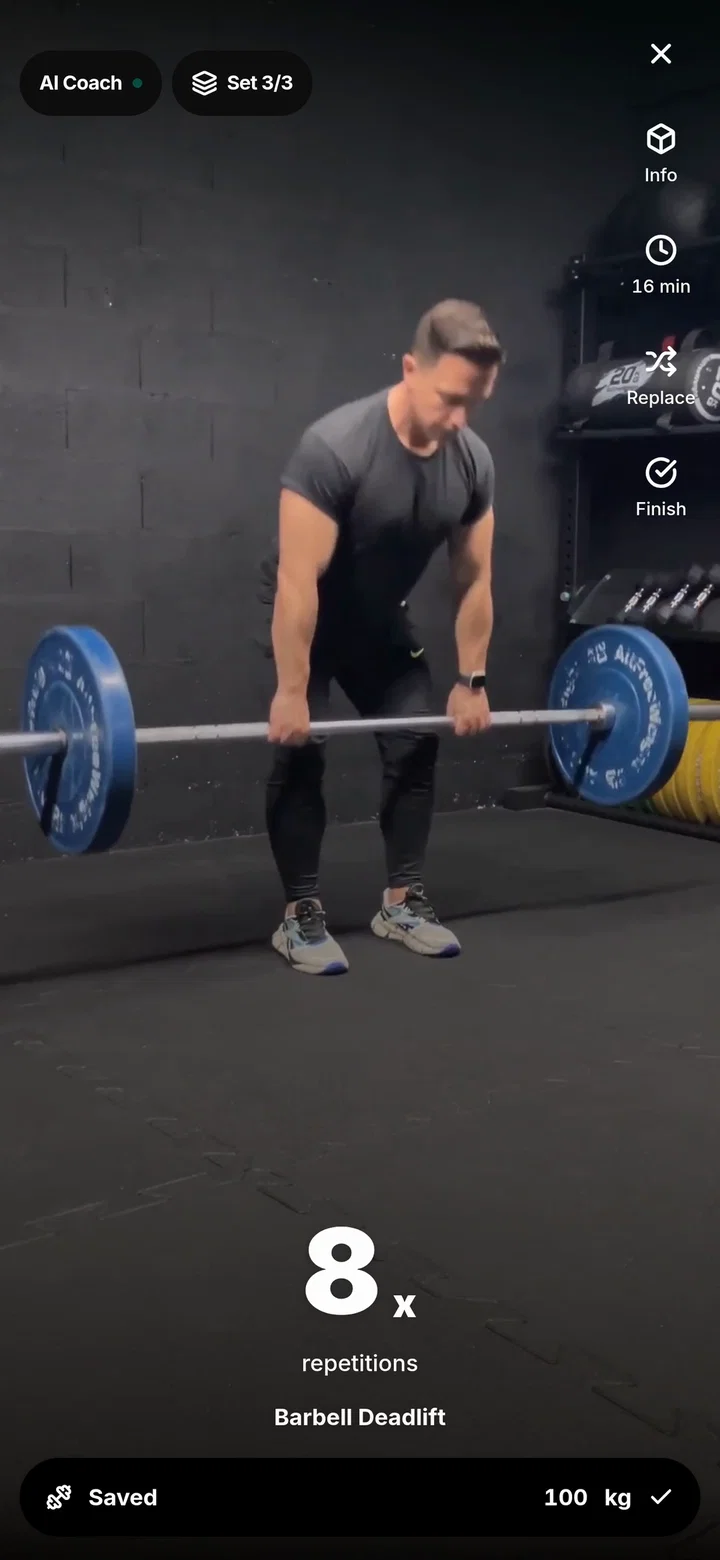
- Strength: you have added 30 to 60 kg (65 to 130 lbs) to your major lifts (squat, deadlift, bench press), again depending on starting point
- Body composition: if you started overweight, you have lost significant fat while building muscle. If you started lean, you are noticeably more muscular
- Health markers: improved insulin sensitivity, higher bone density, better cardiovascular health, lower resting heart rate
Why Results Vary So Much Between People
Here is the truth that fitness influencers do not tell you: people respond to training very differently.
A landmark study by Hubal and colleagues (2005) found that when people followed the exact same resistance training program, some gained 2 to 3 times more muscle than others. A few responders gained up to 50 percent more muscle fiber size, while some non-responders gained almost nothing [4].
Factors you cannot control
- Genetics: muscle fiber distribution (fast-twitch vs slow-twitch), hormone levels, limb length, muscle belly shape. These determine your ceiling and your starting trajectory.
- Age: younger trainees (15 to 25) generally build muscle faster due to higher testosterone and growth hormone levels. But people of all ages can build significant muscle.
- Sex: men typically gain muscle faster due to higher testosterone, but women gain proportionally similar amounts relative to their starting mass.
Factors you CAN control
- Nutrition: eating 1.6 to 2.2 g of protein per kg of bodyweight per day (Morton et al., 2018 meta-analysis) is the single most important nutritional factor for muscle growth [5]. Under-eating protein is the most common reason people do not see results.
- Sleep: 7 to 9 hours per night. Most muscle repair happens during deep sleep. Chronic sleep deprivation can reduce strength output by 5 to 10 percent and blunt muscle protein synthesis.
- Training volume: 10 to 20 working sets per muscle group per week (Schoenfeld, 2017). Too little volume means not enough stimulus. Too much means not enough recovery.
- Consistency: the #1 factor. Training 3 days per week for 12 weeks beats training 6 days per week for 3 weeks and quitting. Showing up is 80 percent of results.
- Progressive overload: increasing weight, reps, or sets over time. Without progressive overload, your body stops adapting after the initial neural phase.
The people who see the fastest results are not the ones with the best genetics. They are the ones who train consistently, eat enough protein, sleep well, and progressively increase their training stimulus.
Signs Your Workout Is Working (Before You Can See It)
Do not wait for the mirror to tell you it is working. By the time visible changes appear (week 6+), you should already have 5 other signals confirming progress:
- The weights feel lighter or you can do more reps with the same weight. This is the most objective measure. Track your lifts in a log.
- You recover faster. The soreness that lasted 3 days in week 1 now lasts 24 hours or less. Your body has adapted.
- Your posture has improved. Stronger back, core, and glute muscles pull you into better alignment without conscious effort.
- You sleep better. Regular resistance training improves sleep quality and reduces the time it takes to fall asleep.
- Your clothes fit differently. The scale might not move (you are gaining muscle while losing fat), but your waistband is looser and your shirts fit better across the chest and shoulders.
If 3 or more of these apply, your training is working. Trust the process.
The 3 Biggest Reasons People Quit Before Results Show
Understanding why people quit helps you avoid the same trap.
1. Unrealistic expectations (social media effect)
Instagram and TikTok show 12-week transformations that are actually the result of years of training, good lighting, flexing, and sometimes performance-enhancing drugs. Real, natural progress is slower and less dramatic. Comparing your week 4 to someone's year 4 is a recipe for demotivation.
Fix: set a 12-week goal, not a 4-week goal. Take progress photos. Judge yourself against your own starting point, not someone else's highlight reel.
2. Scale obsession
The scale measures total weight: muscle, fat, water, and glycogen. If you gain 2 kg of muscle and lose 2 kg of fat, the scale shows zero change. But your body looks completely different.
Fix: use progress photos, tape measurements (waist, chest, arms, thighs), and how your clothes fit as your primary metrics. The scale is one data point, not the verdict.
3. Inconsistent training and nutrition
Missing 2 out of 4 scheduled workouts per week means you are training 2 days per week, not 4. It is better than nothing, but it halves your results and extends the timeline. Inconsistent protein intake is equally damaging: you cannot build muscle on the days you under-eat protein, even if you trained hard.
Fix: pick a realistic training frequency (3 days per week is enough for most beginners) and stick to it for 12 weeks. Meal-prep or identify high-protein foods you can eat daily without effort.
How WorkoutGen Keeps You on Track During the Invisible Phase
The hardest part of seeing workout results is the gap between effort and visible payoff. Weeks 1 to 6 feel like nothing is happening. This is where most people quit, and it is exactly where a structured, personalized program makes the difference.
When you generate a program with WorkoutGen, the engine is designed to solve the three problems above:
- Built-in progressive overload: every workout is calibrated to push slightly harder than the last. Your weights, reps, and sets increase in a planned way so your body never stops adapting. You never have to guess when to add weight.
- Goal-specific programming: whether your goal is muscle gain, fat loss, toning, or strength, the engine adapts exercises, volume, and intensity to your objective. You are not doing a generic routine. You are doing the right routine for your goal.
- Session feedback loop: after each workout, you rate how it felt. The engine adjusts your next session based on your feedback, so you are always training at the right intensity without burning out.
- Progress tracking: WorkoutGen tracks your weights, reps, and workout history. When the mirror is not cooperating, your workout log shows objective proof that you are getting stronger.
The free version gives you a personalized program. The Max plan unlocks the full analytics suite, unlimited regeneration, and adaptive features that keep your program evolving as you progress. But the most important thing is starting and staying consistent for 12 weeks.
Start a real strength program for free
Generate a progressive plan with videos and tracking. Free app. WorkoutGen Max adds AI load suggestions, full customization and advanced analytics.
Generate my free program →Related Reading
- Progressive Overload: The Key to Muscle Growth
- How Much Protein You Need to Build Muscle
- Rest Day and Muscle Recovery Guide
- How to Squat with Proper Form: Science Guide
The Bottom Line
Your body is already changing. It started changing after your first workout. The question is not "is it working?" but "are you patient enough to see it through?"
Here is your timeline:
- Week 1 to 2: stronger (neural adaptations), not bigger
- Week 2 to 6: internal remodeling, harder muscles, better posture, invisible growth
- Week 6 to 12: visible results, comments from friends, clear progress photos
- Month 3 to 6: genuine transformation, new physique emerging
- Month 6 to 12: trained look, approaching intermediate level
The people who succeed are not the ones with the best genetics or the most expensive supplements. They are the ones who train 3 to 4 days per week, eat 1.6 to 2.2 g of protein per kg of bodyweight, sleep 7 to 9 hours, and show up consistently for 12 weeks.
If you want a program that handles progressive overload, adapts to your feedback, and keeps you on track during the invisible phase, generate your free workout plan. The hardest part is the first 6 weeks. After that, the results speak for themselves.
References
[1] Staron RS, et al. Skeletal muscle adaptations during early phase of heavy-resistance training in men and women (PMID: 8005869). Journal of Applied Physiology, 1994.
[2] Damas F, et al. Early- and later-phases satellite cell responses and myonuclear content with resistance training in young men (PMID: 29324825). Journal of Physiology, 2018.
[3] Schoenfeld BJ, et al. Dose-response relationship between resistance training volume and muscle hypertrophy: are there really still any doubts? (PMID: 27805470). Journal of Strength and Conditioning Research, 2017.
[4] Hubal MJ, et al. Variability in muscle size and strength gain after unilateral resistance training (PMID: 15947721). Medicine and Science in Sports and Exercise, 2005.
[5] Morton RW, et al. A systematic review, meta-analysis and meta-regression of the effect of protein supplementation on resistance training-induced gains in muscle mass and strength in healthy adults (PMID: 28698222). British Journal of Sports Medicine, 2018.