Where to Find Free Gym Workout Plans: A Practical Comparison
Compare free gym workout plans in PDF, app, and generator formats. Learn how to choose a structured routine that fits your schedule, goals, and gym equipment.
- free gym workout plans
- workout routines
- fitness generator
- gym program

 Strength Training News
 The Short Answer
If you are wondering where to find free gym workout plans, start with tools that provide a structured program you can consistently follow for more than a single session. A useful plan must match your specific goal, weekly schedule, fitness level, available equipment, and recovery capacity.
This distinction is important because many free gym workout plans are not actually plans. Instead, they are isolated exercise lists, static PDF templates, social media challenges, or one-off AI chat responses. While these resources can offer inspiration, they often leave you with the same recurring problem: not knowing what to do next week to continue making progress.
To be effective, a free plan must help you answer five core questions:
- What specific goal am I training for?
- How many days per week can I realistically train?
- What equipment do I actually have access to?
- How intense should each training session be?
- How does the plan progress over time?
The Main Sources for Free Gym Workout Plans
1. Free Workout Plan Generators
A workout plan generator is the fastest route if you want a personalized program. Instead of copying a generic routine, you input your goal, experience level, schedule, equipment, and constraints. The tool then builds a structured plan around these inputs.
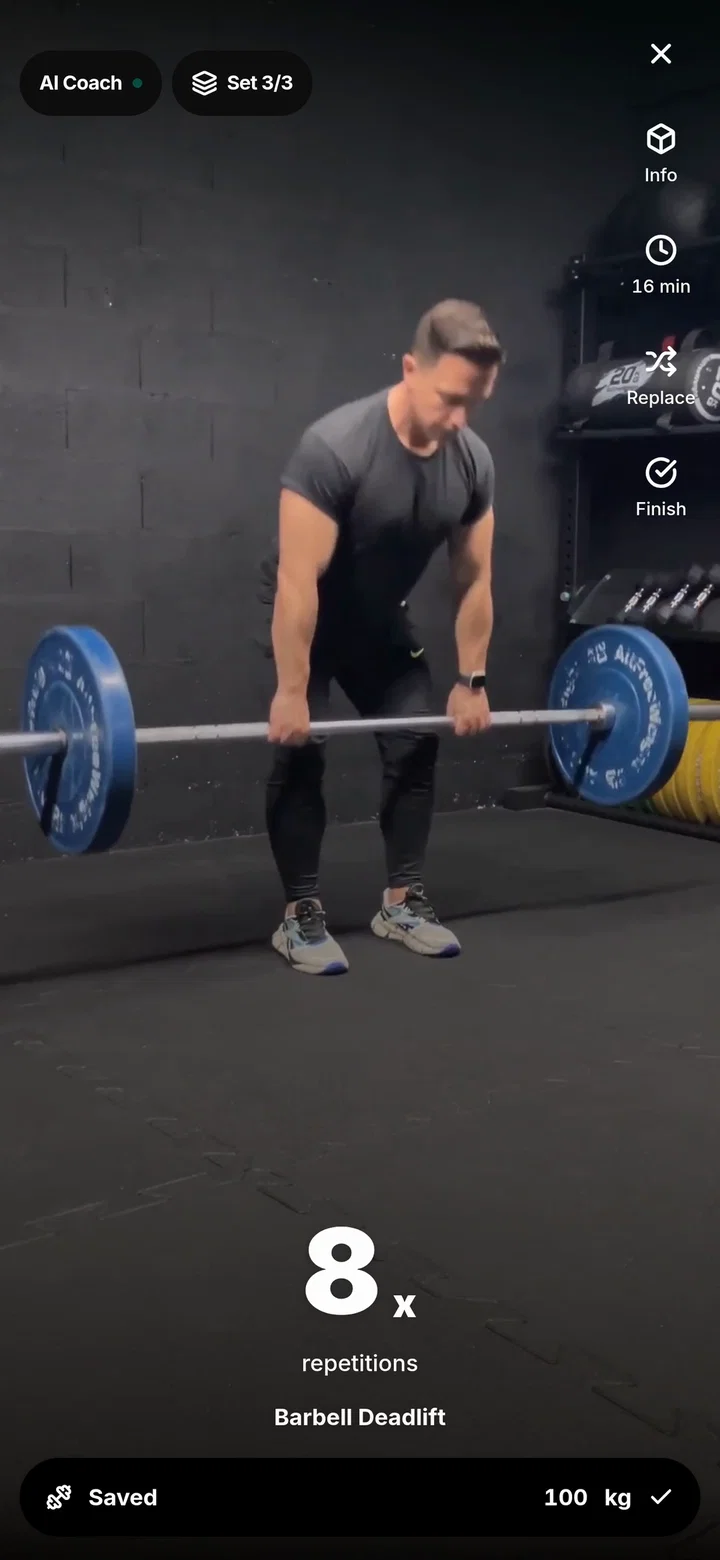
WorkoutGen is designed for this exact use case: creating a structured gym program, then helping you train with video demonstrations and progress tracking. It is particularly useful if your goal is muscle gain, strength, weight loss, or general fitness in a gym environment.
- Best for: People who want a structured plan immediately and do not want to spend hours comparing static templates.
- What to watch out for: Generators that only produce a single routine. A single workout routine is not the same as a progressive training program.
2. Coach-Written Beginner Guides
Guides written by professional coaches are excellent when you want to understand the reasoning behind a plan. For example, WorkoutGen offers detailed beginner guides for:
These resources are valuable if you want context before starting: why specific exercises are selected, why training volume matters, and how progression should work.
- Best for: Beginners who want to learn the principles of training, not just copy exercises.
- What to watch out for: Guides that provide a plan but fail to explain the rules of progression.
3. Free PDFs and Spreadsheet Templates
PDFs and spreadsheets can be useful if you already understand training principles. They are simple, easy to save, and work offline.
The main limitation is that they are static. A PDF cannot tell you what to change when a session becomes too easy, too difficult, or impossible because a specific machine is occupied in a crowded gym.
- Best for: Lifters who want a printable reference or a simple spreadsheet to track manually.
- What to watch out for: Templates that ignore your specific equipment, level, or recovery needs.
4. YouTube Training Programs
YouTube is an excellent platform for learning exercise execution and form. However, it is less reliable as a complete planning system because videos are often disconnected from one another.
You can learn how to perform squats, rows, presses, or how to set up a machine. But if every week begins with a new search for a workout video, you do not have a consistent plan.
- Best for: Exercise demonstrations and learning proper form cues.
- What to watch out for: Jumping between random workouts because a thumbnail looks appealing.
5. General AI Chat Tools
ChatGPT, Gemini, Claude, and other general assistants can quickly generate workout ideas. They are helpful for brainstorming training concepts and creating an initial draft of a routine.
The primary weakness is consistency. If you ask the same question twice, you may get two completely different programs. You must also track your own progression and verify whether the generated plan makes sense.
- Best for: Brainstorming and learning general fitness concepts.
- What to watch out for: Treating a well-formatted AI response as a tested, safe, and effective program.
How to Choose the Right Free Plan
Use this checklist to evaluate any free gym workout plan before you start training:
- Does the plan align directly with your primary fitness goal?
- Does it fit your realistic weekly schedule without requiring unrealistic time commitments?
- Does it utilize the specific equipment available at your gym?
- Does it clearly explain sets, repetitions, rest intervals, and effort levels?
- Does it include a clear progression model from week to week?
- Does it show or explain proper exercise form?
- Does it allow you to track your completion and performance over time?
If a free plan lacks more than two of these elements, it may still serve as inspiration, but it is not a complete training system.
A Practical Approach to Starting
If you want to start training today, use a generator first. It provides a plan quickly and eliminates the obstacle of overanalyzing too many options.
If you want to understand training better, read a detailed guide afterward. The most effective combination is:
- Generate a structured plan.
- Complete your first training session.
- Learn the principles behind the plan.
- Track your training data.
- Adjust your plan only when your data indicates it is necessary.
This is why WorkoutGen focuses on plans you can actively train with, rather than plans you simply read.
Summary
Free gym workout plans are widely available, but structured, progressive, and realistic plans are much harder to find.
Look for a plan that is specific, progressive, and realistic. A good plan should tell you exactly what to do today and provide enough structure so you know what comes next.
If you want the fastest starting point, generate a free plan with WorkoutGen, and then use the beginner guides to understand the structure behind your routine.
WorkoutGen Guides to Read Next
To continue with the same goal, read:
- Best Free Workout Apps 2025: Honest Coach Review
- Free Beginner Strength Program: Power Building 2026
Sources
- Physical Activity Guidelines for Americans, second edition
- ACSM resistance training prescription for healthy adults
Find a WorkoutGen gym plan that adapts to you
Create a free program tailored to your goal, level, available days, and gym equipment.
- Gym program adapted to your goal
- Videos to follow exercises correctly
- In-app workout tracking